
Digging Into Innovation
April 29, 2026
Due Gooder Founders Nate Royal and Ethan Havertape
How University of Louisville Students Created a Way to Due Gooder
In 2020, Brigham Young University (BYU) launched Sandbox, an innovative program designed to bring together students from business, engineering and design backgrounds so they could learn from one another and gain real-world experience. The University of Louisville is unique as it is the only university outside of the Mountain West to offer Sandbox, joining a network that includes BYU, BYU-Idaho, Boise State University, Northern Arizona University, Utah Valley University, Utah Tech University and Utah State University. Sandbox gives students the opportunity to replace 12 to 18 credit hours over two semesters and get real, hands-on experience creating their start-ups.
This opportunity became a reality for College of Business junior Ethan Havertape and J.B. Speed School of Engineering senior Nate Royal when they launched Due Gooder, an AI-powered planning service designed to simplify academic life. By pulling assignment deadlines directly from course syllabi, the platform organizes them into a digital planner and sends reminders via text, email or other notifications, helping students stay on track. For Havertape and Royal, Sandbox provided the structure, mentorship and cross-disciplinary support to turn an idea into a student-focused startup.
Playing in the Sand
Sandbox combines the skills and qualities of the College of Business, College of Arts and Sciences and the J.B. Speed School of Engineering. By drawing on the strengths of the business, arts and engineering schools, students gain a special blend of creative, analytical and technical skills. More importantly, Sandbox teaches valuable soft skills, like communication. “People skills are extremely valuable. Start-ups are networking, talking to investors and to your customers,” said Havertape. The mix of engineering and analytics is also crucial. Royal and Havertape work so well together because their strengths differ. “Nate is focused on the technical side and raising capital through investors. I'm good at the nitty gritty operations, all of our financials and getting all of our marketing plans correct,” said Havertape.
It was that same blend of practical experience and collaboration that drew Havertape to the program. Although Sandbox wasn’t initially on Havertape’s radar – he often ignored the emails – he took a closer look in November 2024, attended info sessions and saw its value. It gave him something more meaningful than business pre-requisites: something tangible with real weight that case studies couldn’t provide. For Royal, a computer science engineering major, Sandbox provided a different kind of opportunity. While it could only replace a limited number of courses, it allowed him to pursue an entrepreneurship minor and fully invest in building a start-up. With students balancing classes, jobs and campus life, taking that kind of risk is uncommon. “Sandbox allowed me to be able to have a risk-free shot at being able to go all in and full-time on a startup to see if we could make something happen,” said Royal.
Building the Castle
Due Gooder started in the fall of Royal’s junior year. “It stemmed from my girlfriend wanting a program that could take her syllabus deadlines and put it on her Google calendar,” said Royal. After a rough semester that nearly led to him dropping out, he realized a tool like this could help him too. Development began in winter 2024 and by spring 2025, Due Gooder was ready for users, even helping Royal achieve his highest GPA yet. Royal and Havertape ended up joining the first Sandbox cohort in the fall of 2025, continuing Royal’s work with Due Gooder, pitching the idea in the Cardinal Challenge and Demo Day. While both are co-founders, their roles differ. Havertape is the Chief Operating Officer, handling the day-to-day operations, financials, campus ambassadors and paid ads. Royal is a combination of the Chief Executive Officer and Chief Technology Officer, focusing on coding, product development and overseeing interns.
Even with Sandbox’s flexibility, balancing academics, social life and the start-up, especially as active fraternity members, was challenging. Still, they’ve made it work. “Due Gooder is taking up most of my time but I'm still able to allocate some of my free time to the fraternity and the couple of classes I'm in this semester,” said Havertape. “It isn't balancing Sandbox and Due Gooder. Due Gooder can only happen because Sandbox opens up some time,” Royal added.
As they’ve adjusted to the balance, they’ve also had to navigate the realities of building a start-up, one of the biggest being churn. Churn refers to the number of users who stop using a website over a short period of time. Rather than discouraging them, churn became a motivator, pushing them to research user behavior and gather feedback. Over the past semester, they’ve reduced churn from 25% to 8% and are looking to get that percentage even lower. “The magic behind that is hours and hours of researching into what your users are doing on your platform, talking to customers [and figuring out] what is actually valuable to them,” said Royal.
Proof is in the Sand

Due Gooder is exceeding expectations, going from 10,000 to 36,000+ users and being named as a 2026 Louisville Business First Start-Up to Watch. “We have bodies signing in every day and it's helping them throughout their academic journey,” said Royal. “I don't think we've really understood the scale we're operating Due Gooder at. I don't know that we ever will.” He and Havertape credit their users for helping improve the platform. They continuously gather feedback from their users, allowing the platform to evolve based on real student needs.
A major milestone was the Vogt Innovation and Technology awards, where Due Gooder was one of 10 Louisville area start-ups selected to pitch. Six of the 10 start-ups got to participate in a 10-week-long accelerator program running from August to October of 2025 and covering topics like scaling and growth. “This is our first time running a business. It was really useful to be able to hear all that advice,” said Havertape. Vogt changed their entire mindset about the company; it became more real than anything before. Vogt didn’t just provide great networking – they also gifted Due Gooder a five-figure investment. “They took a big bet on us, and we’re incredibly grateful for their support,” said Royal.
After the Sand Settles

Having the chance to build their own start-up greatly impacted Royal and Havertape’s professional and academic goals. However, Sandbox is not the only contributor to their success. Courses in CIS, finance and accounting helped Havertape better understand the balance sheets and financial documents. “CIS 344 [has had a great impact]. It's a lot of statistical analysis,” said Havertape. “That's something I can apply to my business.” Although these courses were undoubtedly important in building Due Gooder, both Royal and Havertape give a lot of credit to Jack Manzella for being someone to lean on. As the director of the Sandbox program at UofL, Manzella was able to help the founders every step of the way. From advice to networking, Manzella was in their corner. Sandbox also taught the founders an important lesson. “It's just a different level of competence, self-awareness and things that you learn from when you're having to build a company.” said Royal “There's nobody that's going to come behind you and pick up after you. You’ve really got to figure it out.”
Building a start-up requires a lot of grit and usually is faced with many challenges, but all of that effort was worth it. “Knowing that we're helping students out there I think kind of keeps me going and keeps me wanting to build this product for students, knowing that we can be a help to their everyday life,” said Havertape. For students interested in developing their own app, or even just participating in Sandbox, Royal and Havertape say, just do it. “You just got to be your own kind of hero for it, be your own champion,” said Royal. “Go all in and just give it a shot. You'll figure it out as you go,” said Havertape. Sandbox might seem like a daunting program, that success has to extend beyond UofL, but experiential learning is more than the numbers. “Even if the ventures do not continue beyond the classroom, employers value this type of hands-on experience,” said Jack Manzella. “Programs like Sandbox make our students more competitive in the job market and strengthen the University of Louisville’s position as an innovator in higher education.” The success you build in the program depends on the effort and mindset you bring to the sandbox. Just dig in, stay curious and the rewards will come to the surface.
Dreaming of your own start-up? In Sandbox, you don’t just think outside the box, you build it yourself. Dig in here: https://business.louisville.edu/research-and-centers/forcht-center-entrepreneurship/sandbox
About the UofL College of Business:
Founded in 1953, the UofL College of Business fosters intellectual and economic vitality in our city, region and the global business landscape. Our academic programs, research, community outreach initiatives and commitment to student success inspire lives and businesses to flourish through entrepreneurship, innovation, critical thinking, diversity and the power of people.
Connect with the CoB by following us on LinkedIn, Facebook, Instagram, TikTok and X, or by visiting our website.
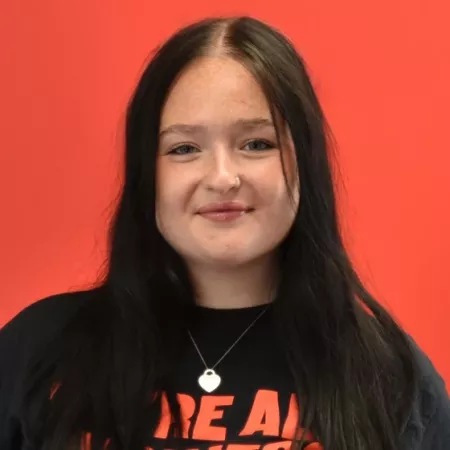
Madison Kurfirst is a student contributor for the Office of Marketing and Communications at the University of Louisville College of Business, where she writes feature stories that highlight student life and the undergraduate experience. She joined the team in August of 2025 after completing her first year with the college's CAPS social media team, where she continues to create engaging content for the university community.
In her free time, Madison enjoys spending time with her friends, exploring Louisville and cheering on the Cardinals at university sporting events. Passionate about storytelling and connection, after graduation, she plans to pursue a career in marketing or journalism.
Related News


